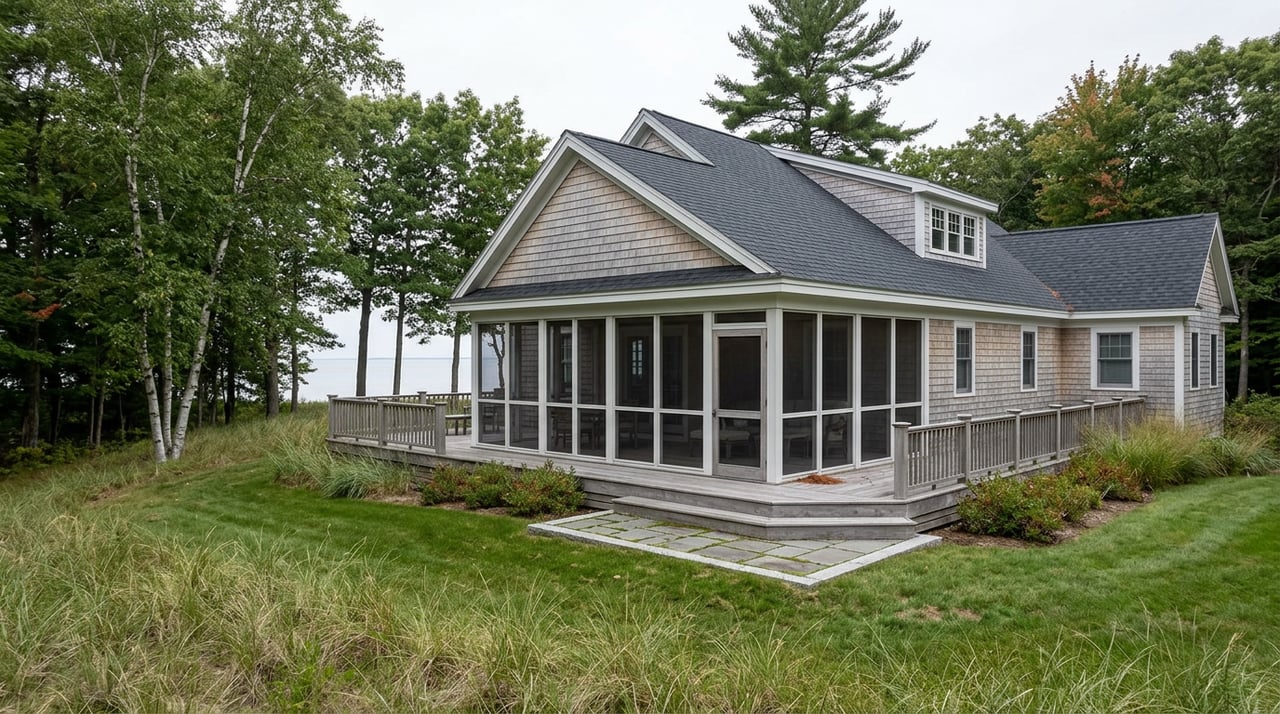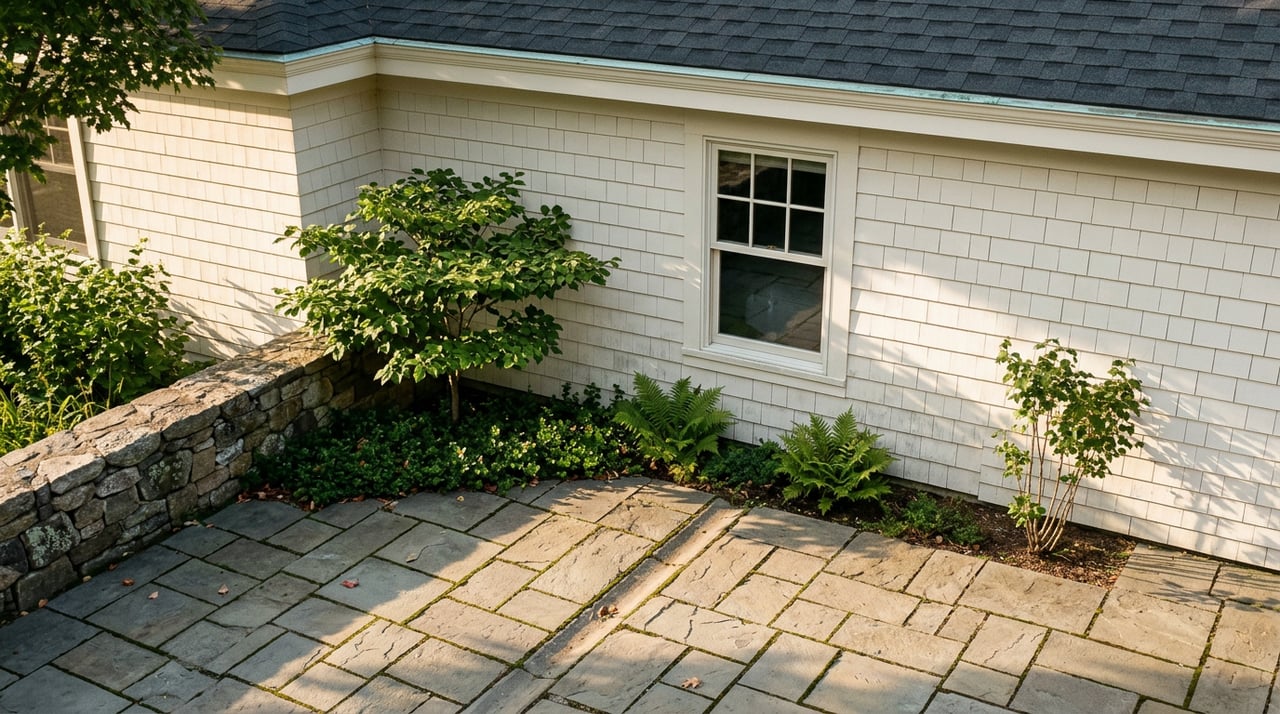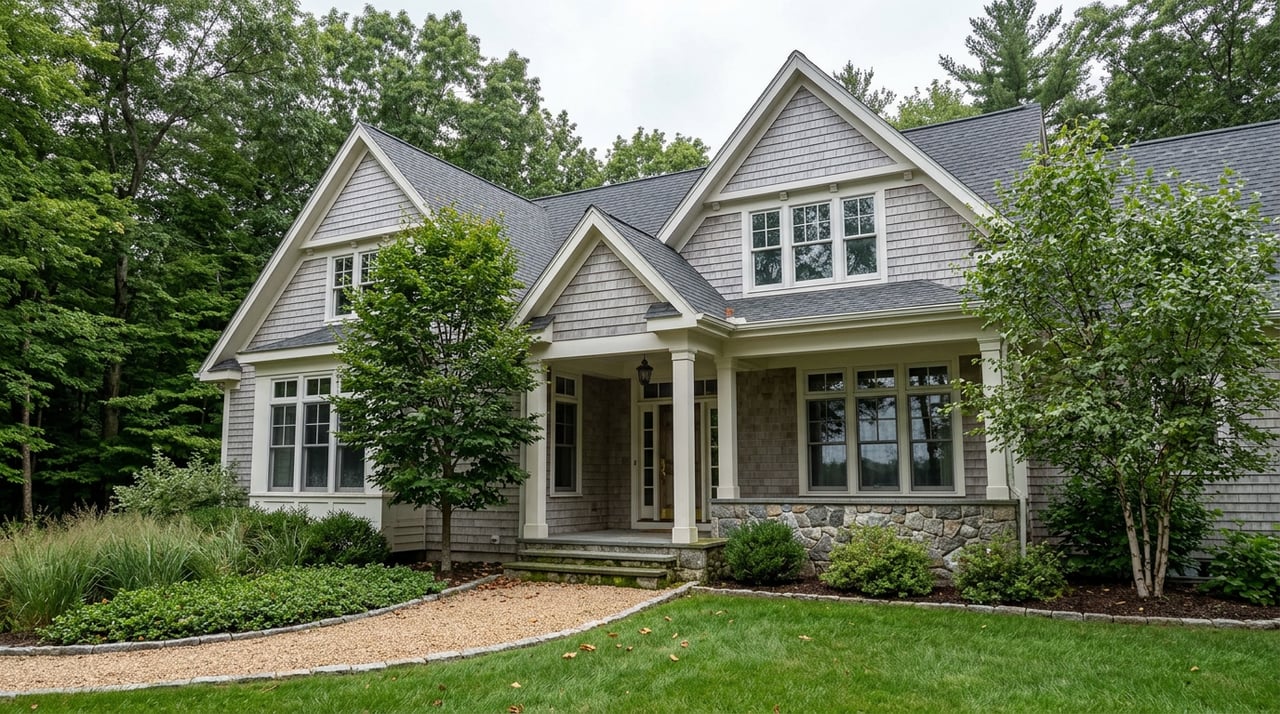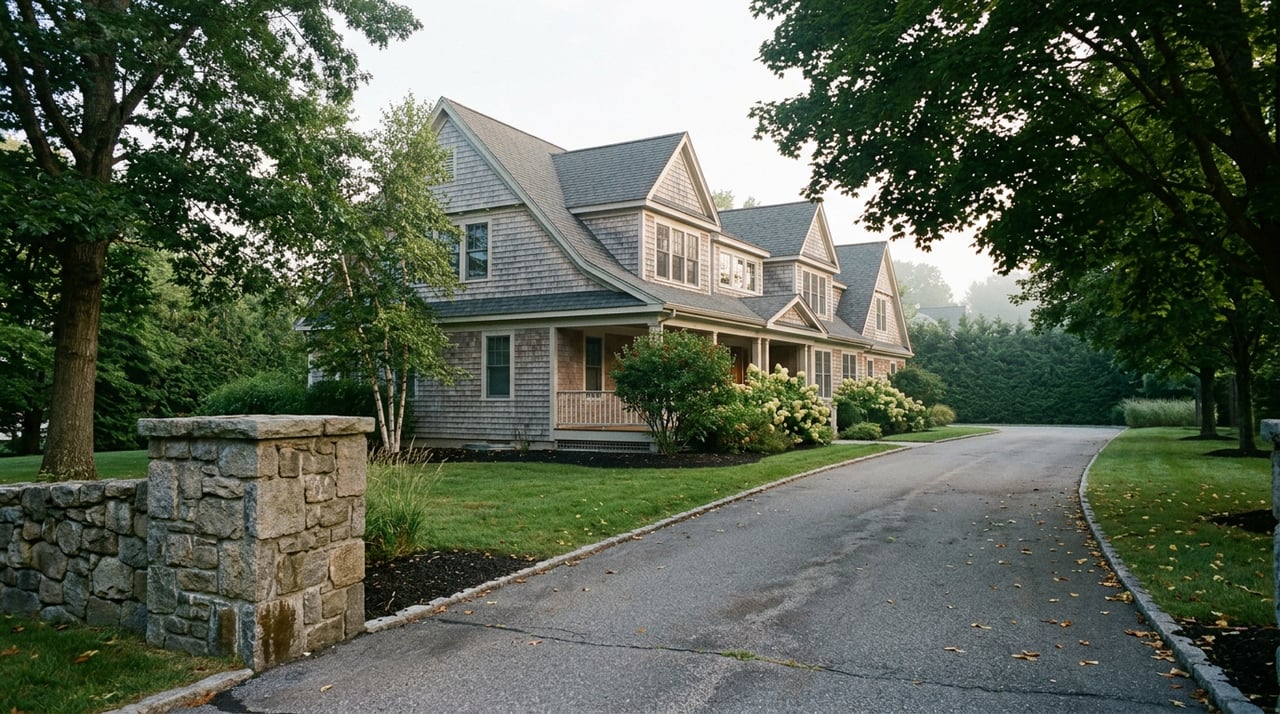
A buyer calls with a number in mind. They've seen the Northport median, checked their monthly payment against it, and they're ready to look at listings. Then they open three of them side by side: a cottage near the marina for $499,000, a gated estate for $6,995,000, and a two-bedroom cabin on a remote stretch of shoreline for $1.1 million. The cabin is 550 square feet.
The buyer's first instinct is that something is broken. Nothing is broken. Northport doesn't have one housing market. It has three, and they were never supposed to line up.
The Number That Describes No House in Particular
In August 2026, homes listed for sale in Northport carried a median asking price around $795,000. That figure is real, but it's an average pulled across properties that have almost nothing in common except a shared zip code. A median works when the underlying units are roughly interchangeable. Northport's aren't.
The village runs on walkability. Northport Point runs on a gate and a set of covenants written generations ago. Cathead Bay runs on how much undeveloped shoreline is left before the state park and the conservancy hold the rest. Each of those forces sets its own price floor, and none of them care what the other two are doing.
The Village, Where Convenience Sets the Price
Downtown Northport is small enough to walk end to end in ten minutes, anchored by the Village of Northport's own G. Marsten Dame Marina, where transient slip reservations for the 2026 season opened January 30. Homes here trade on proximity: to the harbor, to Barb's Bakery, to the grocery store a block off the water. Recent public listings in this stretch have ranged from a one-bedroom cottage in the Homewood Cottage Association at $239,900 up to a modern Scandinavian-influenced cabin on Thunder Road at $795,000. A Village of Northport home on Sixth Street listed at $595,000, and a newly built home on West Street in the Hutchinson's Addition, built by Samuel Scott of Scott Carpentry, listed at $650,000.
This submarket behaves the way most small-town real estate behaves. Price tracks square footage, condition, and distance to Main Street. It's the only one of the three where a standard comparison actually works.
Northport Point, Where the Gate Sets the Price
A few miles north, the rules change entirely. Northport Point is a gated enclave governed by its own cottage owners' association, with a private nine-hole golf course and architectural covenants that predate most of the buyers who now want in. The gate house is staffed mid-May through October, with hours extending to midnight from Memorial Day weekend through September and running 24 hours during peak summer. Access itself is a managed resource, not a given.
Listed inventory here recently included a 6-bedroom, 8-bath estate spanning 8,547 square feet at $6,995,000. But the sticker price only tells part of the story. Northport Point properties carry multi-generational ownership histories and rarely reach the open market at all. When something does list, it's often because a family cycle, not a market cycle, put it there. Buyers who wait for "the right listing" here are often waiting for a specific family's decision, not a seasonal dip in inventory.
Cathead Bay, Where the Conservancy Sets the Price
Then there's Cathead Bay, tucked against Leelanau State Park's 1,300 acres of dunes and forest and bordered by land held by the Leelanau Conservancy. This is where the median stops making any sense at all. A 550-square-foot, two-bedroom cottage built in 1960 recently listed at $1.1 million, which works out to roughly $2,000 per square foot. On the vacant land side, the last remaining lot in the Cathead Point West Association, ten acres with 200 feet of sandy beach protected by a conservation easement, listed at $2.1 million.
None of those numbers are explained by the structures sitting on the land. A cottage with a wall heater, a block basement, and a detached garage isn't worth $2,000 a square foot because of the building. It's worth that because the frontage in front of it is finite, bounded on one side by a state park and on the other by land a conservancy has already taken off the market permanently. Buyers here aren't paying for square footage. They're paying for the fact that no more of this particular shoreline is coming.
Why the Same Word Means Three Different Deals
"Waterfront" gets used to describe all three of these places, and the word is technically accurate every time. But it's doing different work in each sentence. In the village, waterfront means walking distance to a marina and a downtown grid. At Northport Point, it means water plus a gate, a golf course, and a covenant book. At Cathead Bay, it means water plus permanence, a guarantee that the view won't change because the neighboring parcels are already spoken for by a park boundary or a conservation easement.
A buyer who treats these as one market will misprice everything. They'll look at the $1.1 million Cathead Bay cottage and assume it's overpriced next to the $795,000 village cabin with more square footage. They'll look at Northport Point's silence on the open market and assume there's nothing available, when the truth is that inventory there moves through estate planning and family decisions more than through listing agents.
What This Means If You're Comparing Northport to Somewhere Else
If you're cross-shopping Northport against another Leelanau County waterfront town, the first question isn't the median. It's which of these three scarcity structures you actually want to buy into.
If your priority is walking to dinner and having a slip nearby during boating season, you're shopping the village submarket, and standard comps apply. If you're drawn to the idea of a private golf course and a gated address with generational weight behind it, you're shopping Northport Point, and you should expect a slower, more relationship-driven path to a listing rather than a fast scroll through active inventory. If what you actually want is the guarantee that your view stays exactly as it is for the next fifty years, you're shopping Cathead Bay, and you should expect square footage to have almost nothing to do with the number on the sign.
Before you compare a Northport listing to one in Suttons Bay or Leland, ask which of these three logics it's operating under. A $1.5 million listing next to a state park boundary and a $1.5 million listing three blocks from a downtown marina are not the same asset, even if the appraisal district treats them identically for tax purposes.
A Few Questions Worth Asking
Can any buyer purchase inside Northport Point, or is it restricted to existing families? Properties do change hands outside the immediate family, but the association's covenants and the gate-controlled access mean the process looks different from a standard MLS transaction. Expect more relationship-based introductions than open showings.
Is Cathead Bay land actually buildable, or is most of it locked up by conservation easements? Some parcels remain privately held and buildable, but proximity to Leelanau Conservancy land and Leelanau State Park means available lots are limited, and any remaining vacant parcels tend to price at a premium reflecting that scarcity rather than their raw acreage.
Why do so few Northport Point homes show up in an online search? The combination of gated access and multi-generational ownership means listings are infrequent by design, not because the market is quiet. A property search that only scans public portals will miss most of what actually moves in this submarket.
If you're weighing a Northport purchase against another stretch of the Leelanau Peninsula, the conversation should start with which of these three markets fits the life you're trying to buy, not the median number a portal serves up. Peter Fisher works across all three Northport submarkets and the surrounding county, and can walk you through which listings are genuinely comparable and which only look that way on paper. Reach out to schedule a consultation before you set a budget around a number that may not describe the house you actually want.