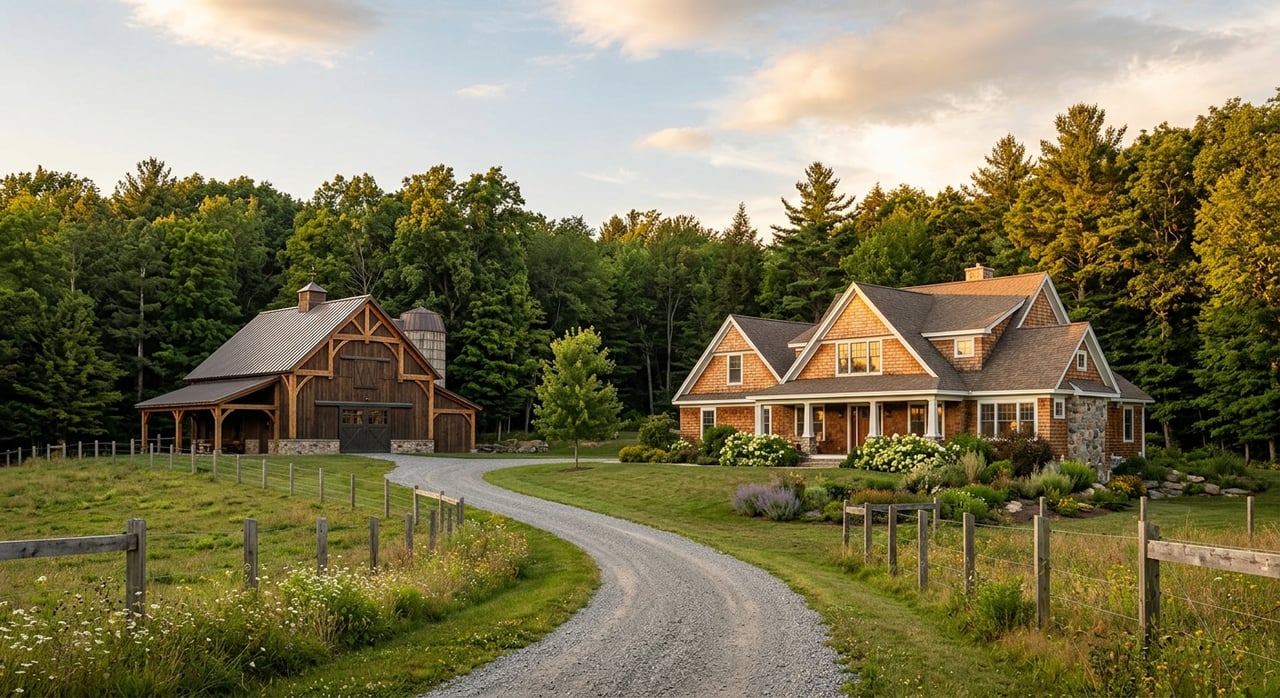
Looking for acreage near Cedar can feel exciting and a little complicated at the same time. You may be picturing a hobby farm, a private homesite, a producing orchard lease, or a larger tract with room to grow, but the right fit depends on more than just price and acreage. In this guide, you’ll get a clear look at the Cedar-area land market, the main types of farm and acreage properties, and the local rules that can shape what you can do with a parcel. Let’s dive in.
Why Cedar Appeals to Acreage Buyers
Cedar sits within Solon Township, an area defined by orchards, wetlands, woodlands, and rolling hills. According to the township master plan, agriculture makes up 19% of township land area, and local planning priorities reflect a strong interest in preserving farmland and rural character. That matters if you want open space, a slower pace, and a setting that still feels tied to working land.
The broader Leelanau County setting adds to that appeal. The county is widely associated with cherry orchards and vineyards, and Michigan State University Extension says agriculture supports more than 1,200 jobs in Leelanau County. For buyers, that means acreage here is not just scenic. It is part of an active agricultural landscape.
What Acreage Options Look Like
Around Cedar, acreage generally falls into three broad categories. Each serves a different kind of buyer, and understanding the difference can help you narrow your search faster.
Small lifestyle parcels
Smaller parcels often appeal to buyers who want privacy, elbow room, and the option for a country home with light agricultural use. Current Cedar-area listings include examples like 3.16 acres priced at $199,000 and 6.32 acres priced at $169,900. These properties can work well for a homesite, a garden, or a modest hobby-farm setup, depending on the parcel and zoning.
In Solon Township’s Agricultural Residential district, the base minimum lot size is 2 acres with at least 200 feet of lot width. That means many smaller acreage listings may still fit the area’s rural pattern while offering enough space for a home and accessory structures. If you want manageable land without taking on a full-scale farming operation, this category is often where the search begins.
Mid-size country tracts
Mid-size parcels can offer a balance between lifestyle use and practical land utility. A current example from Cedar-area listings is 27.54 acres priced at $425,000. Parcels in this range may provide more flexibility for fields, woods, outbuildings, and longer-term planning.
For some buyers, this is the sweet spot. You may have enough acreage to lease out ground, create separation from neighbors, or support more meaningful agricultural activity while still keeping maintenance within reason.
Larger working or recreational holdings
Larger holdings can open the door to broader agricultural use, recreational space, or long-term land stewardship. One current Cedar-area example is an 81-acre parcel priced at $695,000. These properties often have lower asking prices on a per-acre basis than smaller parcels, which is a common pattern in rural land markets.
That lower per-acre number does not automatically make a larger tract the better value for every buyer. Access, terrain, usable acreage, wetlands, and zoning all affect what the land can realistically support. Still, if you are thinking about income potential, privacy, or preserving land for future use, larger tracts deserve a closer look.
How Land Pricing Works Near Cedar
Recent Cedar-area asking prices show a wide spread. Based on current listings, pricing ranges from about $63,000 per acre on a smaller parcel down to about $8,600 per acre on a larger one. That kind of spread is normal because small parcels often carry a premium tied to homesite appeal, while larger tracts tend to trade at a lower per-acre figure.
Countywide, LandSearch shows 204 land properties in Leelanau County with an average listing price of $655,658, an average cost of $63,917 per acre, and an average property size of 10.4 acres. It is important to remember that countywide land listings include more than open farm ground. They also include wooded and recreational parcels, which can affect averages.
When you evaluate land, price per acre is only a starting point. A better comparison also looks at road frontage, shape, access, topography, open versus wooded ground, and any use limitations already attached to the property.
Zoning Matters More Than Buyers Expect
One of the biggest mistakes acreage buyers make is assuming that if land looks rural, almost any rural use is allowed. In Solon Township, much of the local framework buyers will encounter is tied to the AR Agricultural Residential district. That district is intended primarily for farm and rural single-family dwelling uses to help preserve open space and rural character.
By right, the district permits farms and farming activities that follow generally accepted agricultural management practices, except for intensive livestock operations. It also permits single-family dwellings, home occupations, public parks, accessory structures, and small roadside stands. For many buyers, that covers the basics they have in mind.
Key AR district standards
If you are considering a parcel in this district, a few baseline rules matter right away:
- Minimum lot area: 2 acres
- Minimum lot width: 200 feet
- Minimum front yard: 50 feet
- Minimum rear yard: 50 feet
- Minimum total side yards: 20 feet
- Maximum building height: 35 feet
These standards can shape where you place a home, barn, garage, or other structure. On irregular parcels, setbacks and width requirements can affect usable building area more than buyers expect.
Uses That Need Extra Review
Some property ideas need more than standard zoning compliance. Solon Township treats several more intensive or commercial farm-adjacent uses as special land uses that require Planning Commission review.
These include:
- Larger roadside stands and farm markets
- Commercial greenhouses and nurseries
- Campgrounds
- Kennels
- Bed-and-breakfasts
- Boarding and riding stables
- Agritourism event businesses
- Utility-grid solar
- Intensive livestock operations
If you are buying with a business plan in mind, this distinction is critical. A parcel may be agriculturally zoned and still require added approvals for the exact use you want.
Agritourism has specific rules
Agritourism is a good example of why careful review matters. Under the ordinance, agritourism event businesses generally require at least 40 acres, a primary residence on the site, events ending by 11:00 p.m., alcohol service ending by 10:00 p.m., and measures to avoid excessive loss of usable farmland. The Planning Commission may modify some standards, but buyers should not assume flexibility before confirming the details.
For anyone exploring event-based income, this is where due diligence pays off. The land itself may be attractive, but the operating model still has to fit local rules.
Farm Buildings, Animals, and Practical Use
The township ordinance also draws some useful distinctions for day-to-day farm use. Solon states that site plan review is not required for commercial farms, farm buildings, and farm structures that are subject to the Michigan Right to Farm Act and operated in accordance with generally accepted agricultural management practices.
The ordinance further treats domestic or farm animals as customary and incidental to permitted uses. At the same time, confined feeding areas must be at least 50 feet from the nearest property line. If your plans involve animals, fencing, barns, or a more active farm setup, those details should be part of your review before you buy.
Check for Conservation Easements
Some of the most beautiful acreage in Leelanau County comes with permanent conservation restrictions. That is not necessarily a negative, but it does mean the property may not support the future uses a buyer assumes are possible.
The Michigan Department of Agriculture and Rural Development describes agricultural conservation easements as voluntary, legally recorded agreements that restrict land to agricultural and open-space uses and prohibit or limit subdivision and development. These easements do not require public access, can provide tax benefits, and stay with the land for future owners.
The Leelanau Conservancy says it has protected more than 11,000 acres and worked with more than 157 private landowners through conservation easements. It also notes that these private easement lands are not open to the public. In one local example highlighted by NRCS, a 108-acre Leelanau County cherry orchard was protected through an easement and remains in agricultural production with no future development.
If a property is under easement, you will want to understand exactly what is restricted, what is allowed, and how that fits your goals. For some buyers, that long-term protection is a major advantage. For others, it may narrow the property’s usefulness too much.
Income Options for Non-Farming Owners
You do not need to farm the land yourself for acreage to have income potential. If you own suitable ground and are not operating it directly, leasing can be one way to offset carrying costs.
Michigan State University Extension outlines three common arrangements:
- Fixed cash rent, which is a set annual payment
- Crop share, where crop income is divided in an agreed ratio
- Flex rent, which blends fixed rent with shared risk or upside
MSU Extension also notes that cash leases can be as short as one growing season and should be documented in writing. Common crop-share examples include 25/75 when the landowner does not share production costs, and one-third to two-thirds when the landowner pays one-third of seed, fertilizer, and chemical costs.
For a local benchmark, USDA NASS estimated 2024 Leelanau County cash rent for non-irrigated cropland at $88.50 per acre. That figure is only a starting point. Actual rent can vary based on field size, access, soil type, soil fertility, previous cropping history, and how close the parcel is to the farm operation using it.
How to Evaluate a Cedar-Area Parcel
Acreage purchases near Cedar tend to reward a more careful process than a standard homesite search. Before you make an offer, it helps to walk through a practical checklist.
Questions worth asking early
- What zoning district is the parcel in?
- Is your intended use allowed by right, or does it need special approval?
- Is there a conservation easement or other recorded restriction?
- How much of the acreage is actually usable versus wooded or wetland?
- What are the frontage, setbacks, and buildable areas?
- If you want farm income, what kind of lease arrangement fits the land?
These are the kinds of details that can change a property from a great fit to the wrong one. They can also reveal hidden value in a parcel that looks ordinary at first glance.
Why Local Guidance Matters
Land is rarely a one-size-fits-all purchase, especially in a place like Cedar where scenic value, agricultural use, and long-term restrictions can overlap. A parcel may look ideal online but require much closer review once you dig into zoning, conservation status, and realistic use options.
That is where local market knowledge matters. Whether you are searching for a small hobby-farm parcel, a larger tract with lease potential, or land that fits a longer investment horizon, a detailed, parcel-by-parcel approach can help you move with more confidence.
If you are weighing acreage or farm property options around Cedar, Peter Fisher can help you evaluate land with a local, analytical perspective and a clear understanding of Leelanau County’s market.
FAQs
What types of acreage are available around Cedar, Michigan?
- Around Cedar, you will generally find small lifestyle parcels, mid-size country tracts, and larger working or recreational holdings, with current examples ranging from just over 3 acres to 81 acres.
What does zoning allow on Cedar-area farm property?
- In Solon Township’s AR Agricultural Residential district, farms and farming activities that follow generally accepted agricultural management practices are permitted, along with single-family dwellings, accessory structures, home occupations, public parks, and small roadside stands.
Do agritourism uses need approval near Cedar?
- Yes. In Solon Township, agritourism event businesses are treated as special land uses and generally require Planning Commission review, along with compliance with standards such as acreage minimums and event-hour limits.
Can a conservation easement affect farm property in Leelanau County?
- Yes. Agricultural conservation easements can permanently restrict subdivision and development while preserving agricultural and open-space uses, and those restrictions continue with future owners.
Can you lease out acreage near Cedar for farm income?
- Yes. Common options include fixed cash rent, crop share, and flex rent, and the 2024 USDA NASS estimate for non-irrigated cropland cash rent in Leelanau County was $88.50 per acre as a local benchmark.
What should you check before buying acreage around Cedar?
- You should confirm zoning, permitted uses, any special land use requirements, conservation easements, usable acreage, setbacks, and whether the parcel’s physical features support your goals.