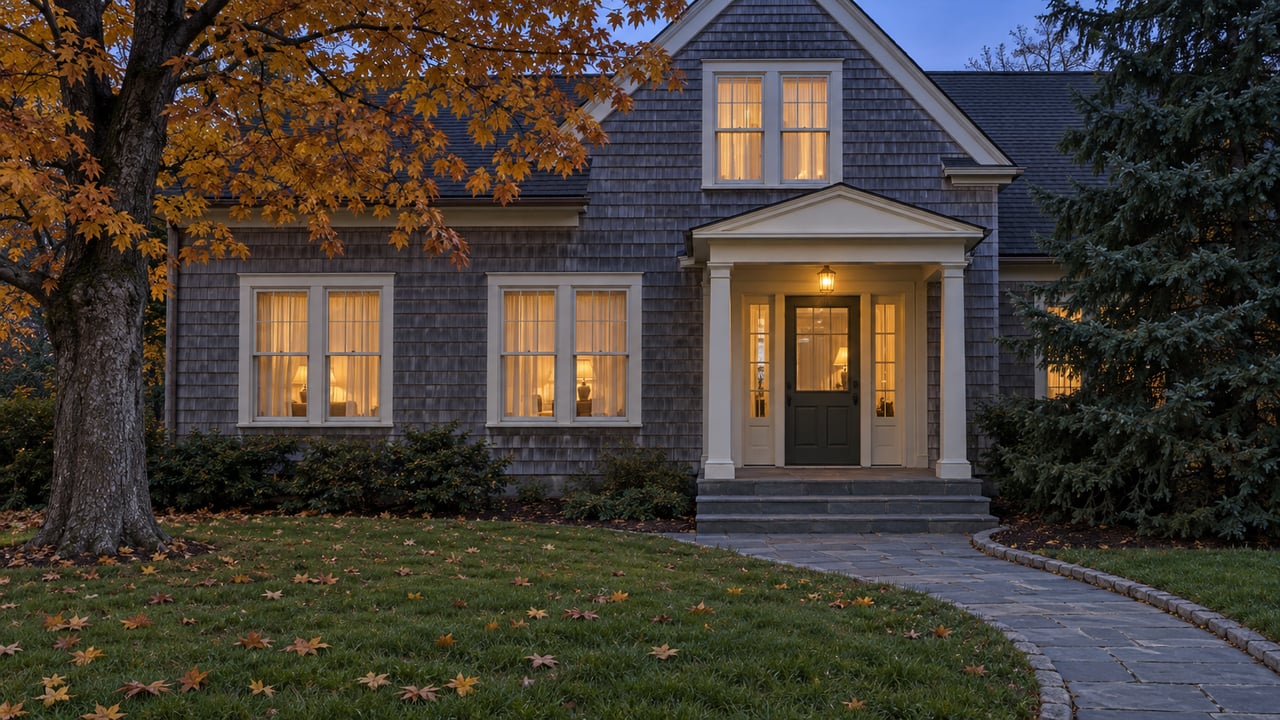
The Village of Empire now has a short-term rental ordinance. As of late October 2026, the village's posted list of forms includes no registration application. The Empire Village Council adopted Short-term Rental Registration Ordinance No. 5 of 2026 on August 25, and the village's public notice says it takes effect thirty days after publication. The council adopted it before the registration process itself was settled.
For anyone counting on a cottage inside the village limits to earn rental income, the purpose of the ordinance matters more than the paperwork. In the village's own words, the ordinance exists "to gather accurate data for monitoring the impact short-term rentals have on the community." The ordinance places no limit on rentals. What it produces is a count, and that count will be the starting point for every rental debate Empire has from here on.
What Is Actually in Force
The Leelanau Enterprise reported that the ordinance requires owners to register every year, pay a fee and give emergency contact information so someone can respond when a problem comes up at the property. It does not cap the number of short-term rentals. The same report said the details of the registration process were not settled on the night of the vote.
Since then, one step has been taken. At the September 10 work session, Village President Dan Davis appointed himself and Office Manager Acton as the STR Registration Implementation Committee, and the council agreed unanimously. The September 22 agenda had no implementation item. Neither did the October 8 work session, which covered a front-end loader, the Capital Improvement Plan and Tree City USA. The village's forms page links a 2026-27 fee schedule, but its list of forms includes no STR registration application.
So right now the requirement exists in law and is still waiting on paperwork. To see why that waiting period matters, look at what the count is meant to measure.
The Number Empire Is Working From
The village has counted its housing twice before. Both counts come from the Leelanau Ticker's timeline of the issue, and the newer one is nearly three years old.
| Housing type in the village | 2019/2020 study | November 2023 committee count |
|---|---|---|
| Short-term rentals | 49 | 63 |
| Year-round residences | 161 | 147 |
| Seasonal homes | 115 | 131 |
| Long-term rentals | 18 | 22 |
Between those counts, short-term rentals rose by 14 and year-round residences fell by 14. The Ticker reported that short-term rentals went from about 14 percent of village housing to 17.3 percent. The 2023 count was made by a three-member Short-Term Rental Committee of Council: trustees March Dye, Meg Walton and Linda Chase. Their report said rentals "provide value to our community." It also said the drop in year-round units and the rise in rentals affect "our housing supply for year-round residents, our labor force, the residential character of our neighborhoods, and the welfare of our community."
That 2023 table is the most recent number the village has. The registry is how it gets a new one, and this time the count is official, repeated every year and kept by the village itself.
Why the Count Comes Before a Cap
Supporters said openly that the count is meant to come first. When the ordinance stalled in July, the Enterprise reported that a motion to send it to public hearing failed 4-3. Supporters described registration as a first step that would help the village understand how many rentals it has "before considering additional regulations like a cap." At the August 25 council meeting, a public commenter, Bob Chase, cited planner Chris Grobbel's recommendation to collect data for two years before considering a cap, according to the draft minutes. That came from a commenter quoting a planner. The council has not voted on any timeline.
The way the final vote was described points the same direction. Council member Maggie Bacon urged colleagues to "start with a registration ordinance." She said residents had told the council: "Lower the temperature, take it slow." The Enterprise reported that several council members and residents saw the ordinance "as a starting point rather than a final answer."
The housing pressure behind the debate is on record too. In the Ticker's June 2026 coverage, former trustee Ella Skrocki said young long-time residents could not find stable year-round rentals or afford homes in the village.
For a buyer, the practical point is this. A rental projection for a village property today is built on rules the council has described as a beginning. The ordinance passed 6-1. Trustee Meg Walton cast the only no vote, and she said it had "no enforcement mechanism, no penalty, no structure, no violation process." She also pointed to missing standards on trash, parking and noise. Her follow-up motion, committing the council to answer residents' questions and work toward standards, passed unanimously. So the council has formally said it intends to come back to operating standards, and the people who backed registration have said a cap is a question for later.
The Zoning Amendment, Read Two Ways
A second ordinance passed the same night by a closer 5-2 vote. It amends Article 2.02 of the village zoning ordinance to add definitions for Accessory Dwelling, Dwelling Unit, Rent and Short-Term Rental, among others. The two sides disagree about what it does.
Bacon called it a clarification. She told the council the word "transient" in the zoning code had always been understood to mean short-term rentals, and that "there is nothing in the zoning ordinance that changes what exists today." She also said it does not open short-term rentals to every zoning district. Council member March Dye read it more broadly. She said it "would effectively allow short term rentals in every dwelling unit in the village with no regulation at all, other than the need to register." Dye suggested sending it to the village attorney first. The council passed it without that review.
For a buyer whose plan includes an accessory dwelling or a second unit, the way the new definitions apply to a specific parcel is a question for the village's zoning administrator, not something to infer from a council debate.
Where the Village Line Falls
All of this applies only inside the Village of Empire, which is a separate government from Empire Township. The township's posted list of ordinances includes its zoning ordinance and others, but no dedicated short-term rental ordinance. Glen Arbor Township's posted list does not include one either. Two properties with Empire addresses can fall under different rules depending on which side of the village boundary they sit.
Lansing could also play a part. Michigan House Bill 6026 would create a statewide short-term rental registry and database. House Bill 6027 would clarify that a total ban on short-term rentals is prohibited. Both were introduced June 2, 2026 and referred to the House Government Operations Committee, and neither had moved past that stage in the official histories.
Questions for the Village Office Before an Offer
The full ordinance can be inspected or bought at the Empire Village Office, 11537 S. Leelanau Hwy., weekdays 8:00 a.m. to 4:00 p.m., or by calling (231) 326-5466. Reading it should come before any rental projection. Questions worth asking:
- Is the registration fee set yet, and is it part of the 2026-27 fee schedule?
- When is the first registration deadline, and does an existing registration carry over when a property sells?
- Is the Good Neighbor Guide available yet, and what does it ask of owners?
- Has the council, including at its October 27 regular meeting, taken up implementation or the trash, parking and noise standards from Walton's motion?
- How does the amended Article 2.02 apply to this particular parcel and dwelling type?
- Is the property inside the village limits or in Empire Township?
A Few Quick Answers
Does Empire limit how many short-term rentals it allows? Not under the ordinance adopted August 25, 2026. Supporters have described the data it collects as the groundwork for considering a cap later.
What is the most recent count of rentals in the village? A November 2023 council committee count found 63 short-term rentals, 17.3 percent of village housing, according to the Ticker.
Does the ordinance cover the whole Empire area? It covers the Village of Empire. Empire Township's posted ordinance list shows no separate short-term rental ordinance.
This post is general information about a local ordinance, not legal, tax or financial advice. If you are buying with rental income in mind, confirm the rules for your property with the village and with your attorney or tax advisor.
If a property in or near Empire is on your list and rental income is part of the plan, Peter Fisher can help you map out the questions above against a specific address before you commit. Schedule a Leelanau County consultation and we'll work through it together.